मल में खून आना: बवासीर (Piles) या कोई गंभीर बीमारी? कैसे पहचानें
This article has a recorded physician review. It is for general education and does not replace individual medical advice.
मल में खून आने का हर मामला बवासीर नहीं होता। लाल, गहरा या काला मल किस बीमारी का संकेत है और डॉक्टर को कब दिखाना जरूरी है—विस्तृत मेडिकल गाइड।
Why You Should Never Self-Diagnose Bleeding as Piles
Finding blood in the toilet bowl is alarming. Most people in India assume it is just piles (hemorrhoids) or heat in the body. They buy an over-the-counter soothing ointment from the neighborhood pharmacy, alter their spice intake for three days, and hope it goes away. Self-diagnosing every drop of blood as piles is one of the riskiest habits in digestive health. Blood can enter your digestive tract anywhere from your food pipe down to your rectum. Knowing how to read those differences helps you decide whether you need fiber and water, or a colonoscopy evaluation.
Look at the Colour: Bright Red, Maroon, or Jet Black?
The color of the blood is the single most informative clue about where the bleeding originates. Fresh bright red blood coats the outside of hard stool or drips after passing stool, pointing to piles or an anal fissure. If bright red streaks blend inside loose stool, the cause often lies higher in the colon, such as ulcerative colitis or polyps. Dark maroon blood originates in the small intestine or right colon. Jet black, sticky stool (melena) with a foul odor indicates bleeding in the stomach or duodenum, such as a bleeding peptic ulcer or ruptured esophageal varices.
How to Tell Fissures and Piles Apart
Anal fissures and piles cause ninety percent of mild bright red bleeding, but they feel very different:
- Anal Fissure: The hallmark is sharp, intense pain during and immediately after passing stool, often described as passing glass shards. Bleeding is seen as a distinct streak on tissue.
- Internal Hemorrhoids (Piles): Located above the nerve line, so they rarely cause sharp pain unless thrombosed. Drops of bright red blood splash into the pan after passing stool.
- Painless bleeding should never be ignored, as colonic polyps and early colorectal growths are also completely painless.
Five Warning Signs You Should Never Ignore
Consult a gastroenterologist without delay if you notice any of the following red-flag symptoms:
- Change in Bowel Habits: Constipation alternating with loose stools for more than three weeks.
- Unexplained Weight Loss or Fatigue: Pale skin, dizziness, and low hemoglobin indicating iron deficiency anemia.
- Pencil-Thin Stools: Stools that look consistently ribbon-like, hinting at narrowing inside the rectum.
- Blood Mixed with Pus or Mucus: Urgency to pass stool with mucus, typical of inflammatory bowel disease.
- Age Over 45: Any new rectal bleeding in individuals over 45 requires an endoscopic check.
What Happens During a Clinical Checkup in Ranchi
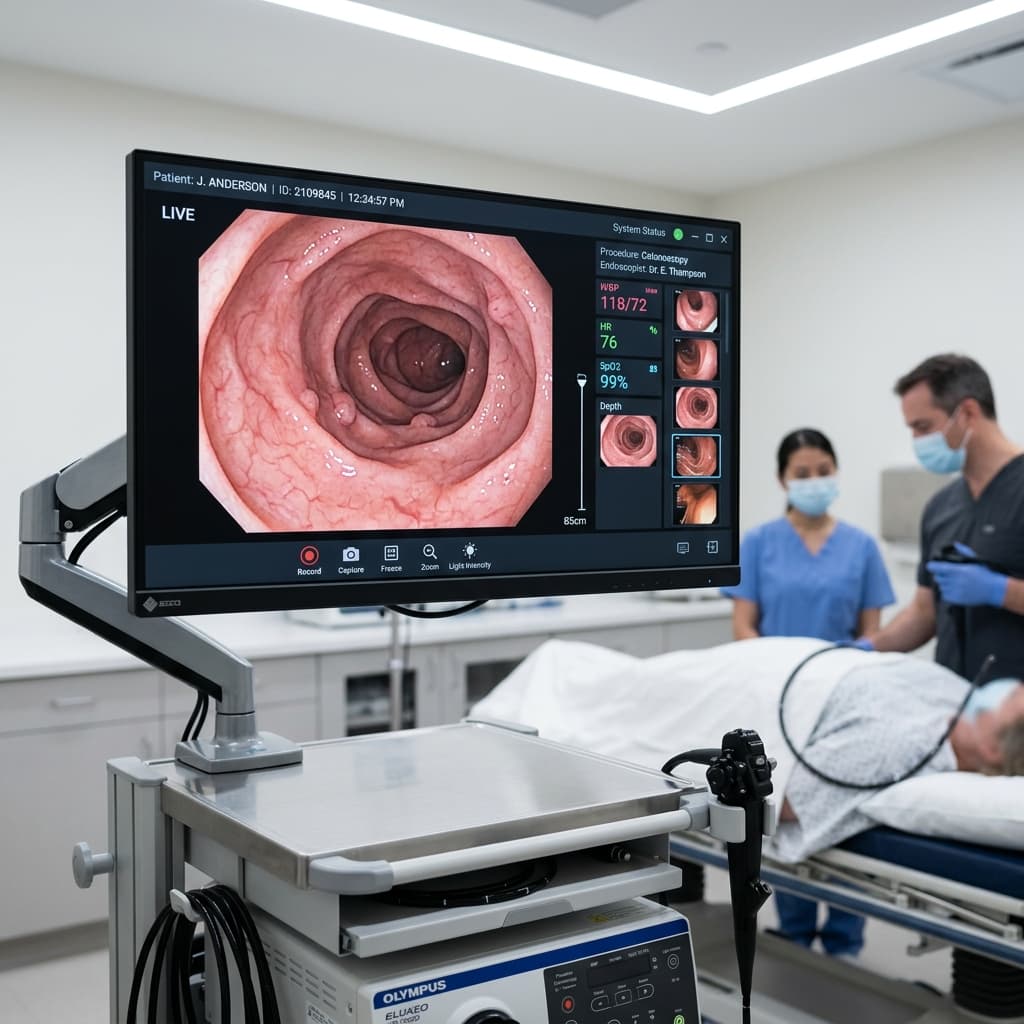
When you visit a specialist, the evaluation begins with a private digital rectal examination. If red flags are present, a painless daycare colonoscopy is performed under conscious sedation. If a bleeding polyp is discovered, it can be removed immediately during the test before it ever turns into a growth. Book an appointment with Dr. Akhilesh Yadav for personalized clinical guidance.
अक्सर पूछे जाने वाले सवाल
Is blood in stool always piles?+
No. While hemorrhoids and anal fissures cause bright red bleeding on hard stools, bleeding can also arise from colonic polyps, ulcerative colitis, or upper GI bleeding.
What does jet black tarry stool indicate?+
Jet black sticky stool (melena) indicates bleeding in the stomach or upper small intestine, where stomach acid oxidizes blood. It requires urgent specialist evaluation.
When is a colonoscopy recommended for rectal bleeding?+
A colonoscopy is recommended if bleeding is dark maroon, accompanied by weight loss or bowel habit changes, or occurs in anyone over 45 years of age.
Clinically Reviewed By

Dr. Akhilesh Yadav
MBBS, MD, DM (Gastroenterology)
Gastroenterologist & Hepatologist · Orchid Medical Centre, Ranchi
This article has a recorded physician review. For individual advice, contact your treating clinician.
Medical Disclaimer: This content is for general educational purposes only and does not constitute medical advice, diagnosis, or treatment. Always consult a qualified physician for personal health decisions.
About Dr. Akhilesh →Share this Medical Guide
यह जानकारी किसी की मदद कर सकती है।